Terminal Exposure: The Unguarded Chokepoints Where America's Defense Supply Chain Is Most Vulnerable
The debate over American defense supply chain security has, in recent years, concentrated heavily on the upstream problem: the sourcing of rare earth minerals, the consolidation of semiconductor fabrication in Taiwan, the dependence on Chinese chemical precursors for energetic materials. These are legitimate and serious concerns. They are also concerns that have attracted sustained policy attention, significant congressional interest, and measurable investment in remediation.
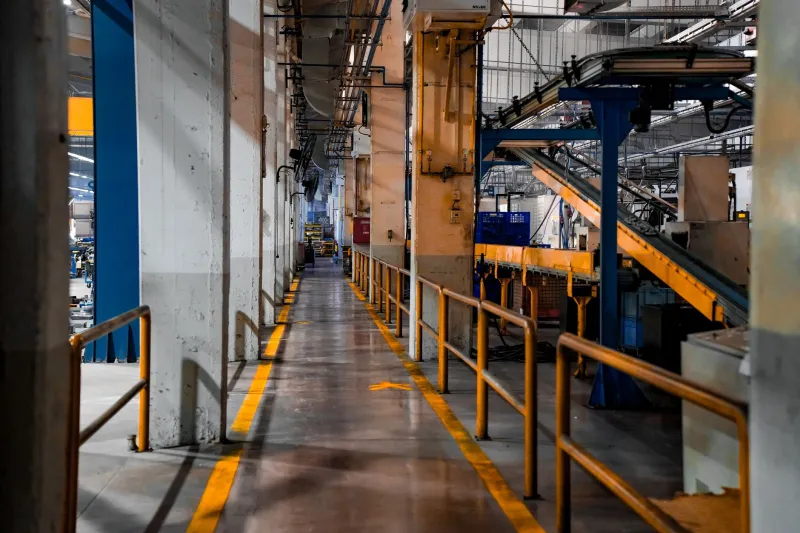
The downstream problem has not received equivalent scrutiny. The final stages of defense production — the assembly facilities, the specialized logistics networks, the last-mile integration processes that bring weapons systems from advanced manufacturing to operational readiness — constitute a category of vulnerability that is simultaneously more immediate and less visible than the upstream risks that dominate the policy conversation.
Why the Final Mile Is the Most Dangerous
The logic of supply chain security tends to focus on origins: where materials come from, who controls the extraction and processing infrastructure, what leverage a foreign power might exercise over a critical input. This framing is intuitive and not wrong. But it systematically underweights the vulnerabilities that accumulate at the end of the production process, where complexity peaks and oversight frequently thins.
Final-stage manufacturing and integration operations for major defense platforms involve an extraordinary convergence of specialized subcontractors, proprietary software systems, classified technical documentation, and time-sensitive logistics coordination. The prime contractors who hold these programs — Lockheed Martin, Raytheon, Northrop Grumman, and their peers — maintain rigorous internal security protocols. The challenge is that the ecosystem surrounding them does not.
The companies responsible for specialized calibration, software integration, component installation, and final systems testing for major platforms frequently operate at a scale and with a security posture that is entirely mismatched to the sensitivity of what they are handling. Many are small and mid-sized enterprises that lack the counterintelligence awareness programs, personnel security infrastructure, and network monitoring capabilities that the threat environment demands. They are also, by the nature of their work, deeply embedded in the most sensitive phases of production.
Single Points of Failure in Complex Systems
Modern defense platforms are engineering achievements of extraordinary complexity. An F-35 contains approximately 300,000 parts sourced from suppliers across multiple countries. A Virginia-class submarine integrates systems from hundreds of specialized vendors. The integration of these components into functional, combat-ready systems depends on a relatively small number of specialized facilities and, critically, a relatively small number of individuals with the expertise to perform or oversee final integration work.
This concentration creates single-point failure risks that adversaries have demonstrated an interest in exploiting. A targeted cyberattack on a facility performing software integration for a major weapons platform does not need to destroy the facility to create significant capability degradation. Subtle manipulation of configuration parameters, insertion of dormant code into systems that will only activate under specific operational conditions, or even the disruption of the calibration processes that ensure weapons systems perform to specification — any of these outcomes could compromise a platform's operational effectiveness without triggering the kind of visible failure that would prompt immediate investigation.
The 2020 SolarWinds intrusion offered a preview of this threat vector in a non-defense context. The attack succeeded precisely because it targeted the software update infrastructure that organizations trusted implicitly — the digital equivalent of the final-mile integration process. Defense-sector analogs to that vulnerability exist and have not been fully addressed.
Logistics as Attack Surface
Beyond the manufacturing facility, the logistics networks that move defense components and completed systems to operational locations represent a category of exposure that receives inadequate security attention.
The movement of sensitive defense components from production facilities to military installations involves a chain of custody that passes through commercial shipping infrastructure, third-party logistics providers, and transportation networks that are not uniformly subject to the security requirements that govern the production facilities themselves. Chain-of-custody integrity — ensuring that a component that leaves a certified facility arrives at its destination without having been accessed, substituted, or tampered with — is a more difficult problem than it appears, particularly for components moving through commercial logistics channels.
Port facilities present a particular concern. As analyzed in previous Global Security Map reporting, American port infrastructure carries compounding vulnerabilities that extend well beyond the defense logistics context. For sensitive defense components moving through commercial port infrastructure, the exposure is acute. Container inspection rates remain low, and the specialized technical knowledge required to identify tampered or substituted defense components is not a capability that port security personnel routinely possess.
The Workforce Dimension
Final-stage manufacturing and integration for defense platforms depends on a specialized workforce that is itself a vulnerability. The personnel who perform software integration, systems calibration, and final assembly for major weapons programs possess technical knowledge of extraordinary sensitivity. They understand not merely the specifications of the systems they work on, but the tolerances, the failure modes, the software architectures, and the operational parameters that determine how those systems perform under real-world conditions.
This knowledge is a target. Foreign intelligence services have demonstrated sustained interest in recruiting or compromising individuals with access to final-stage production processes. The insider threat dimension of supply chain security — the risk posed by personnel who have been recruited, coerced, or compromised — is particularly acute at the final-mile stage, where a single individual with the right access and the wrong allegiances can introduce vulnerabilities that upstream security measures will never detect.
Personnel security programs at the subcontractor level vary dramatically in their rigor. Companies performing sensitive final-stage work under defense contracts are required to meet baseline security standards, but the enforcement of those standards and the depth of ongoing personnel security monitoring are inconsistent across the industrial base.
Closing the Gap
Addressing final-mile supply chain vulnerability requires a reorientation of the security investment calculus that has historically favored upstream risk mitigation. Several measures warrant priority attention.
First, the Defense Contract Audit Agency and the Defense Contract Management Agency require expanded mandates and resources to conduct more rigorous security assessments of final-stage subcontractors — not merely financial audits, but operational security reviews that assess network security posture, personnel security programs, and physical security infrastructure.
Second, the software integration processes for major weapons platforms require the kind of zero-trust architecture that the federal civilian sector has been mandated to adopt, applied with defense-grade rigor. The assumption that software delivered through trusted channels is uncompromised is an assumption that adversaries have demonstrated the capacity to exploit.
Third, chain-of-custody protocols for sensitive defense components moving through commercial logistics infrastructure require standardization and enforcement mechanisms that currently do not exist at adequate scale.
The upstream vulnerabilities in American defense supply chains are real and deserve the attention they have received. But the threats that are closest to the point of operational impact — the ones embedded in the final stages of production and delivery — represent the exposure that adversaries will most aggressively target precisely because American policy has been slowest to address it.