Pressure Points: Why America's Energy Pipeline Network Has Become the Preferred Battlefield for Adversaries Avoiding Direct Confrontation
The Geometry of a Target
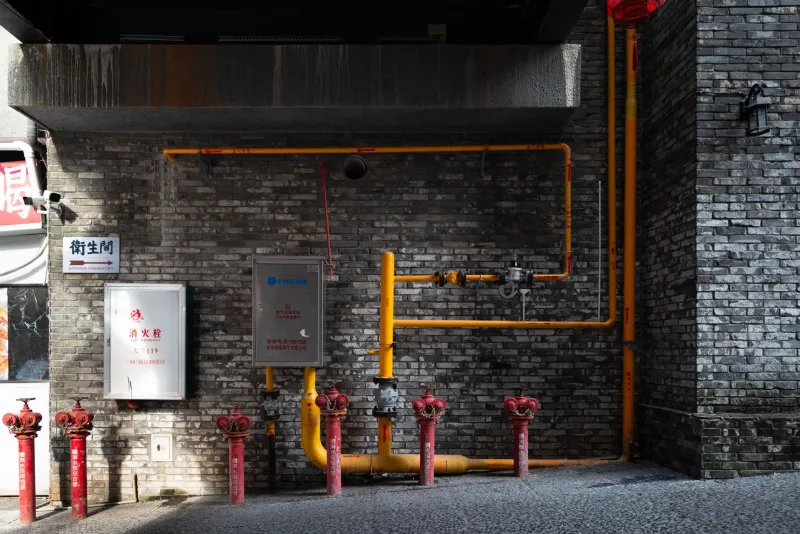
America's pipeline infrastructure does not resemble a single, defensible installation. It is, by design and by decades of incremental expansion, a dispersed web — more than 2.7 million miles of natural gas distribution lines, liquid petroleum pipelines, and hazardous materials conduits threading through urban corridors, rural farmland, and environmentally sensitive zones simultaneously. That geometry, which once represented an engineering achievement, now constitutes a strategic liability.
For adversaries unwilling or unable to engage American military power directly, this network presents something considerably more attractive: a target set that is large enough to guarantee partial success, complex enough to frustrate attribution, and consequential enough to generate measurable economic disruption without triggering a conventional military response. In the language of gray zone competition, energy pipelines occupy a near-perfect operational space.
The 2021 ransomware attack against Colonial Pipeline — which supplies roughly 45 percent of the fuel consumed along the Eastern Seaboard — demonstrated, with uncomfortable clarity, what happens when that space is exploited. A single intrusion into an operational technology environment produced fuel shortages across six states, triggered panic buying, and forced the declaration of a federal emergency, all within 72 hours. The attackers, affiliated with the DarkSide ransomware-as-a-service operation and assessed to have operated from Russian territory, achieved strategic-level disruption through a largely criminal mechanism. The distinction between criminal enterprise and state-enabled coercion, in that instance, was functionally irrelevant to the Americans standing in line at empty gas stations.
The Adversary Landscape Is Not Monolithic
Analysts who focus exclusively on nation-state actors risk misreading the full scope of the threat. The pipeline threat environment is populated by at least three distinct categories of actors whose motivations, capabilities, and operational signatures differ substantially — and whose activities occasionally intersect in ways that complicate both attribution and response.
State-affiliated actors, primarily Russian and Chinese intelligence services, approach pipeline infrastructure as an element of long-term strategic positioning. Russian military doctrine, reflected in its historical operations against Ukrainian energy infrastructure and its cultivation of cyber proxies, treats energy disruption as a legitimate coercive instrument during periods of political tension. American pipelines represent a parallel opportunity: pre-positioned access that can be activated during a crisis to impose costs without crossing the threshold of armed conflict. Chinese actors, by contrast, appear more focused on reconnaissance and data collection — mapping control system architectures, understanding operational dependencies, and building the intelligence picture that would support future disruption if strategic circumstances demanded it.
Terrorist organizations present a different threat profile. While sophisticated cyber intrusion remains beyond the reach of most non-state groups, physical sabotage does not. Pipelines traverse enormous distances through areas with minimal physical security presence. Compressor stations, metering facilities, and river crossing points represent nodes where a small team with basic knowledge and rudimentary materials can cause disproportionate damage. Domestic extremist movements, including both eco-motivated and ideologically violent actors, have demonstrated sustained interest in pipeline infrastructure as a symbolic and functional target.
Hacktivist networks occupy a third category — actors whose technical capabilities vary widely but whose operational tempo has increased markedly since 2022. Groups aligned with Russian information operations have claimed attacks against Western energy infrastructure with varying degrees of credibility, while pro-Ukrainian collectives have targeted Russian energy assets in apparent retaliation. The proliferation of industrial control system exploitation tools, increasingly available through underground forums, has lowered the technical barrier for actors in this category to a degree that was not anticipated by infrastructure protection frameworks written even five years ago.
Attribution and the Intelligence Deficit
One of the most consequential challenges facing American security professionals is the difficulty of attributing pipeline incidents with sufficient confidence to support a policy response. The same technical infrastructure that enables ransomware groups to obscure their origins also allows state intelligence services to conduct operations beneath a criminal veneer. When an intrusion into a pipeline control network is discovered, the forensic trail frequently leads through multiple jurisdictions, anonymizing services, and intermediary actors before reaching anything resembling an identifiable origin.
This attribution deficit has direct policy consequences. Without confident attribution, the proportionality calculus for a response becomes legally and diplomatically complicated. Adversaries have learned to exploit this ambiguity deliberately, structuring operations to remain below the threshold of definitive state attribution even when state resources and direction are involved. The result is a structural asymmetry: attackers benefit from operational ambiguity, while defenders must meet a higher evidentiary standard before responding with equivalent force.
Federal agencies including the Cybersecurity and Infrastructure Security Agency (CISA), the Transportation Security Administration (TSA), and the Department of Energy have expanded their pipeline security mandates in recent years, producing updated cybersecurity directives and encouraging voluntary information sharing. Progress has been genuine but uneven. The pipeline sector encompasses a large number of private operators whose security investments, technical sophistication, and willingness to engage with federal partners vary considerably. Smaller regional operators, in particular, frequently lack the resources to implement the layered defenses that TSA directives recommend, creating predictable weak points in a network whose security is only as strong as its least-protected segment.
Cascading Consequences and Strategic Leverage
The economic consequences of pipeline disruption extend well beyond the immediate cost of interrupted fuel delivery. Modern supply chains are calibrated to function with minimal inventory buffers, meaning that even short-duration outages propagate rapidly through manufacturing, transportation, and agricultural sectors. Petrochemical facilities dependent on pipeline-delivered feedstocks face production shutdowns that cannot be easily reversed. Regional electricity grids relying on natural gas generation confront dispatch challenges that, under certain seasonal conditions, could threaten grid stability.
Adversaries conducting strategic planning are aware of these cascading dynamics. Targeting a pipeline is not simply an attack on a physical asset — it is an intervention in an interconnected economic system whose downstream effects multiply the impact of the original disruption. From a cost-benefit perspective, the ratio is extraordinarily favorable to the attacker: a relatively modest investment in reconnaissance, access, and execution can generate economic damage and political pressure orders of magnitude greater than the resources expended.
This leverage calculation is central to understanding why pipeline infrastructure has become a preferred instrument of sub-threshold coercion. In an era when direct military confrontation with the United States carries prohibitive risks, the ability to impose measurable economic costs through infrastructure disruption — while maintaining plausible deniability — represents a genuinely attractive strategic option.
Mapping the Path Forward
Addressing the pipeline threat requires moving beyond the compliance-oriented framework that currently governs much of the sector's security posture. Mandatory minimum standards, while necessary, are insufficient when adversaries are actively studying those standards and designing operations to exploit the margins they leave unaddressed. A more effective approach would integrate continuous threat intelligence — including classified assessments of adversary reconnaissance activity — into the operational security practices of pipeline operators in near real time.
Physical and cyber security must also be treated as genuinely integrated domains rather than parallel disciplines managed by separate organizational units. The most sophisticated attacks against industrial infrastructure combine digital intrusion with physical disruption in sequences designed to overwhelm response capacity. Defenders who address these dimensions separately will consistently find themselves operating behind the threat.
For security professionals and policymakers monitoring this domain, the central lesson of the past several years is that pipeline infrastructure is not a peripheral security concern. It is, increasingly, the terrain on which strategic competition is being conducted — quietly, persistently, and with consequences that extend far beyond the facilities themselves.