Shadow Armies, Durable Networks: Why America's Counter-Proxy Framework Is Failing in Real Time
The Architecture of the Modern Proxy
For decades, American strategic planners conceptualized proxy forces through a relatively narrow lens: a patron state funds and arms a militant group, that group executes violence on the patron's behalf, and the relationship ends or evolves when the immediate conflict does. That model is now dangerously obsolete.
What mid-tier regional powers — Iran, Turkey, the UAE, and increasingly Qatar and Saudi Arabia — have constructed over the past fifteen years is something fundamentally different. These are not opportunistic militias assembled for a single campaign. They are institutionalized shadow armies with their own logistics chains, revenue streams, legal facades, and cross-border personnel pipelines. They are built, deliberately, to persist.
The distinction matters enormously for intelligence collection. Traditional military intelligence frameworks are designed to detect force concentrations, weapons transfers, and command-and-control signatures. The new proxy model disperses all three across jurisdictions, embeds financial flows within legitimate commercial activity, and deliberately mimics the organizational patterns of NGOs, construction firms, and diaspora community organizations. The result is a threat architecture that is structurally invisible to the instruments designed to find it.
The Structural Advantages Nation-States Cannot Replicate
Conventional state militaries carry enormous overhead: standing armies require payroll, pension systems, domestic political accountability, and the logistical burden of maintaining readiness across peacetime and wartime conditions simultaneously. Proxy networks, by contrast, operate on a fundamentally different cost curve.
First, they are modular. Personnel can be activated, stood down, reassigned across theaters, and rebranded within new organizational shells without triggering the bureaucratic signatures that state military movements generate. A fighter who appears on a payroll in Lebanon this year may surface in a humanitarian organization in West Africa the next, drawing on the same patronage network without any detectable continuity of command.
Second, they are financially diversified in ways that sanctions regimes were never designed to address. Iran's proxy ecosystem, for example, draws revenue from fuel smuggling in the Persian Gulf, real estate holdings in West Africa, cryptocurrency conversion in Southeast Asia, and direct state transfers routed through front companies in jurisdictions with limited financial transparency. No single interdiction point can meaningfully degrade the whole.
Third — and perhaps most consequentially — they have developed genuine governance functions in contested territories. Hezbollah's social services infrastructure in southern Lebanon is the most documented example, but the pattern repeats across Sahel-adjacent zones, parts of Central Asia, and increasingly in Latin American corridors where regional powers are extending influence. When a proxy force delivers electricity, adjudicates disputes, and provides medical care, it earns a form of political legitimacy that American kinetic responses cannot simply erase.
Why Current US Strategy Is Fighting the Last War
The United States' counter-proxy toolkit was largely designed in response to the Iraqi insurgency experience and the subsequent effort to degrade al-Qaeda affiliates in the Sahel and Arabian Peninsula. That toolkit emphasizes three instruments: targeted strikes against leadership nodes, financial network disruption, and partnered capacity-building with host-nation security forces.
All three face structural limitations against the new proxy model.
Targeted strikes against leadership are effective when organizations are hierarchical and when leadership succession is slow or disruptive. Modern proxy networks are deliberately designed with distributed leadership and redundant succession pipelines. Removing a commander does not degrade the network's operational capacity in the way it once did; in many cases, it accelerates the promotion of younger, more tech-literate cadres who are harder to track.
Financial disruption through Treasury Department designations and correspondent banking pressure has achieved real results against first-generation proxy financing. But as Global Security Map has previously reported, decentralized finance mechanisms and cryptocurrency conversion corridors are creating alternative financial rails that OFAC's existing authorities were not written to address. Proxy networks that began migrating financial flows toward these instruments five years ago are now largely insulated from the tools that constrained their predecessors.
Partnered capacity-building with host-nation forces is, in principle, the most sustainable counter-proxy instrument. In practice, it has repeatedly failed because the host nations in question are themselves penetrated by the proxy networks American advisors are trying to degrade. The political will necessary to genuinely confront entrenched proxy infrastructure rarely survives the domestic political costs it imposes on partner governments.
The Detection Gap and What It Costs
The intelligence community's ability to map proxy networks is constrained by a structural mismatch between collection priorities and threat signatures. SIGINT collection is optimized for state-level communications infrastructure; proxy networks increasingly rely on encrypted commercial platforms, in-person courier systems, and fragmented cell structures that generate minimal exploitable signals. HUMINT penetration of proxy networks is extraordinarily difficult given the kinship and sectarian bonds that form the core of most patronage structures.
The practical consequence is a persistent detection gap at precisely the moment when these networks are most dangerous — during their formation and early consolidation phases, before they have generated the operational signatures that collection systems are designed to recognize. By the time a proxy force becomes visible to American intelligence, it has typically already achieved the organizational durability that makes degradation costly and uncertain.
For policy makers and security professionals, the immediate implication is that counter-proxy strategy must shift its center of gravity from disruption to early mapping. Identifying patronage networks, financial pipelines, and governance footprints before they consolidate is dramatically more cost-effective than attempting to dismantle them after the fact. That shift requires investment in analytic frameworks and collection architectures that the current intelligence community is not yet resourced to sustain.
Toward a More Honest Assessment
The proxy proliferation problem does not have a clean solution. These networks have evolved specifically to exploit the seams in American strategy, and the regional powers sponsoring them have demonstrated a sophisticated understanding of where those seams lie.
What an honest assessment demands is a willingness to retire strategic assumptions that no longer correspond to the threat environment. The belief that proxy forces are inherently brittle, financially fragile, and politically isolated has been falsified by the evidence of the past decade. The networks that have survived sanctions, strikes, and sustained partner-nation pressure are not the exception — they are the new baseline.
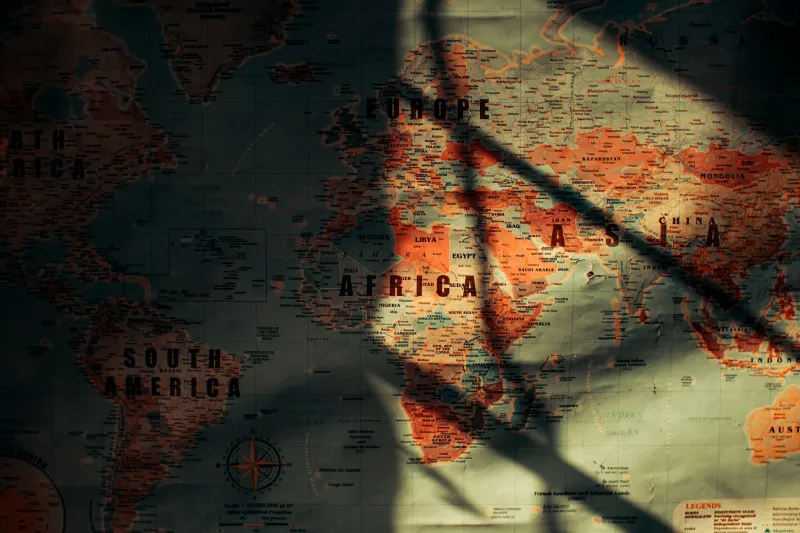
For the security professionals and policy makers who rely on accurate threat mapping, the first step is accepting that the map itself needs to be redrawn.