Silent Laboratories: Why America's Biosecurity Architecture Is Blind to the Next Engineered Pandemic
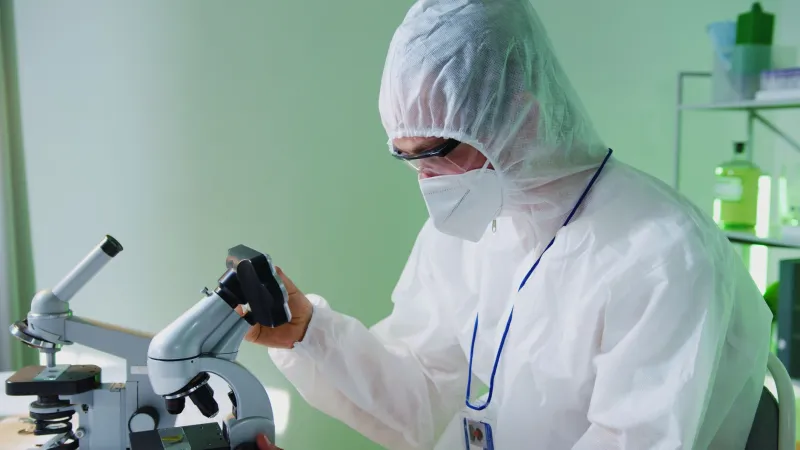
For decades, the architecture of global biosecurity has rested on a foundational premise: that nation-states capable of conducting sophisticated biological research would be subject to some form of international accountability. That premise — embedded in the Biological Weapons Convention, reinforced by multilateral verification discussions, and assumed across the intelligence community's threat modeling — is quietly disintegrating. What is emerging in its place is a dispersed, largely invisible network of research activity operating in jurisdictions where oversight is theoretical at best and nonexistent at worst.
The intelligence community has no reliable map for this terrain. That absence of cartography is itself the threat.
The Accountability Gap No One Is Talking About
When analysts discuss biological threats, the conversation typically gravitates toward state-sponsored programs in countries such as Russia, China, or North Korea — adversaries with known infrastructure, trackable procurement patterns, and intelligence histories that enable at least partial threat assessment. These programs are dangerous. But they are, in a meaningful sense, legible. They exist within the logic of deterrence and strategic competition that American security institutions were built to navigate.
What defies that logic is the proliferation of dual-use biotechnology capacity in states where governance has collapsed or never fully materialized. Across parts of sub-Saharan Africa, Central Asia, and the broader Middle East, biological research infrastructure — ranging from rudimentary cell culture laboratories to more sophisticated fermentation and genomic sequencing capabilities — has expanded rapidly over the past fifteen years, often funded by international development grants, pharmaceutical partnerships, or academic exchange programs that were never designed with security screening in mind.
The dual-use problem is not new. Anthrax fermenters and vaccine production equipment share the same basic design. Gain-of-function research techniques that enhance pathogen transmissibility have legitimate applications in vaccine development. What is new is the geographic distribution of these capabilities — and the near-total absence of intelligence infrastructure capable of monitoring them in the locations where they are now concentrated.
Why Detection Methods Are Failing
Traditional biosecurity intelligence has relied on a combination of signals intelligence, procurement monitoring, and human intelligence networks embedded within state institutions. Each of these tools degrades sharply when applied to ungoverned spaces.
Procurement monitoring, for instance, assumes that dual-use biological materials and equipment flow through traceable commercial channels subject to export controls. In practice, equipment increasingly moves through third-country intermediaries, grey-market suppliers, and informal distribution networks that mirror the sanctions evasion architectures documented across other illicit domains. A freeze-drying unit purchased through a front company registered in a Gulf free trade zone and delivered to a facility in a country with minimal customs enforcement is, for practical purposes, invisible to standard screening mechanisms.
Satellite imagery analysis — a tool that has proven valuable in monitoring nuclear and chemical weapons programs — offers limited utility for biological threats. Unlike nuclear facilities, which require distinctive infrastructure such as cooling towers and specialized containment architecture, a functional pathogen research laboratory can operate inside an unremarkable commercial building with no externally detectable signature. The physical footprint of dangerous biological work is, by nature, small.
Human intelligence networks face a compounding problem. In the very environments where monitoring is most urgent — conflict zones, collapsed states, territories controlled by non-state actors — the institutional relationships that enable intelligence collection have either never existed or have been severed by years of instability. Recruiting and sustaining reliable sources inside these environments requires sustained investment that the intelligence community has historically not prioritized for biological threat missions.
Mapping the Known Hotspots
While comprehensive mapping remains elusive, analysts have identified several geographic clusters that warrant elevated concern.
Central and West Africa present a particular challenge. The region hosts a substantial number of internationally funded biosafety level-2 and level-3 laboratories established to support disease surveillance for Ebola, Lassa fever, and other endemic pathogens. These facilities represent legitimate public health infrastructure. They also represent a concentration of dual-use capability in countries where governmental oversight is inconsistent and where laboratory security protocols are frequently inadequate. The 2014-2016 Ebola outbreak response, while ultimately contained, demonstrated how rapidly pathogen material and research capacity can become difficult to account for during periods of institutional stress.
Parts of the former Soviet periphery — particularly in the Caucasus and Central Asia — retain legacy biological research infrastructure whose current operational status and chain of custody remain incompletely documented. The Soviet-era Biopreparat program dispersed biological research capacity across dozens of facilities, many of which transitioned to ostensibly civilian purposes after 1991. The fate of equipment, materials, and — critically — trained personnel from that period has never been fully resolved.
More recently, analysts have flagged the intersection of organized criminal networks with pharmaceutical manufacturing capacity in Southeast Asia and parts of Latin America as an emerging concern. The same infrastructure that enables illicit pharmaceutical production can, under certain conditions, be repurposed for more dangerous biological work.
The Asymmetric Risk Calculus
For American security and public health infrastructure, the asymmetry embedded in this threat is stark. The investment required to develop a dangerous pathogen in an ungoverned laboratory environment is orders of magnitude smaller than the cost of responding to its release. The COVID-19 pandemic — regardless of its precise origins — demonstrated with painful clarity that even a single biological event of sufficient scale can impose trillions of dollars in economic damage, overwhelm hospital systems, and generate cascading social disruptions that persist for years.
A deliberately engineered pathogen, optimized for transmissibility or lethality and released without warning, would stress American public health infrastructure in ways that emergency planners have consistently assessed as catastrophic. The Centers for Disease Control and Prevention, the Department of Homeland Security, and the Department of Defense have each conducted exercises modeling such scenarios. The results are not public. The general conclusions, however, are not difficult to infer from the scale of ongoing pandemic preparedness investment.
What those investments have not adequately addressed is the upstream intelligence problem. Consequence management capabilities are improving. Threat detection capabilities — specifically the ability to identify dangerous research activity before it produces a deployable threat — are not keeping pace.
Closing the Map's Blank Spaces
Addressing this gap requires a fundamental reorientation of how the United States thinks about biosecurity intelligence. Several operational imperatives stand out.
First, the intelligence community must develop dedicated collection capabilities oriented toward ungoverned biological research environments — not as an ancillary function of broader counterterrorism or nonproliferation missions, but as a primary analytical priority with dedicated resources and career pathways.
Second, the existing international laboratory partnership programs administered through agencies such as the Defense Threat Reduction Agency and the Department of State need to be explicitly reframed as intelligence-gathering mechanisms, with security screening and ongoing monitoring built into grant conditions and partnership agreements.
Third, academic and commercial genomic sequencing networks — which now process biological data from laboratories worldwide — represent an underutilized source of anomaly detection. Patterns in sequencing requests, reagent procurement, and published research from specific geographic clusters can, with appropriate analytical frameworks, serve as early indicators of concerning activity.
The blank spaces on the biosecurity map are not empty. They are occupied by threats that have learned, deliberately or by circumstance, to remain invisible to the frameworks designed to find them. Filling those spaces is not a theoretical policy aspiration. It is an operational necessity — and the window for building the required capabilities before they are urgently needed is narrowing.