When Networks Become Weapons: The Rising Threat of Cyber-Physical Attacks on Critical Infrastructure
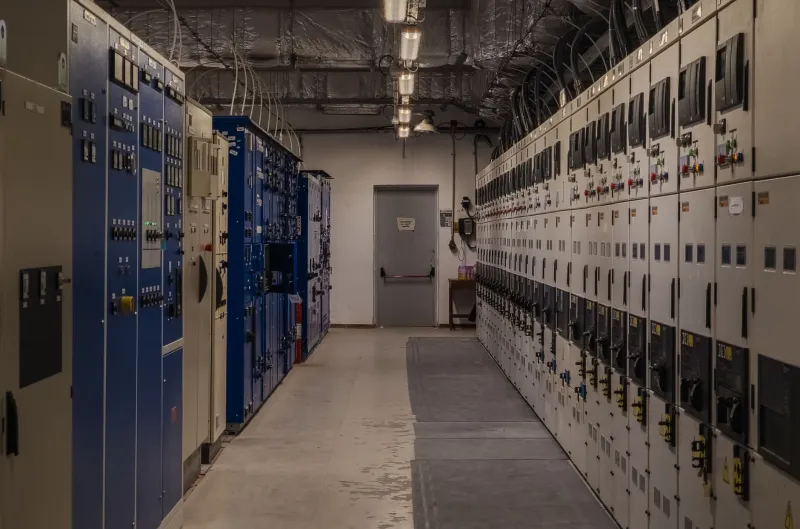
The Boundary That No Longer Exists
For decades, industrial operators maintained a working assumption that physical systems and digital networks inhabited separate domains. Valves, turbines, and circuit breakers operated through proprietary control systems largely isolated from the broader internet. That assumption is now operationally obsolete.
The proliferation of Internet of Things (IoT) devices, cloud-connected sensors, and remote monitoring platforms has collapsed the perimeter that once separated informational risk from physical harm. Today, a compromised network node inside a water treatment facility is not merely a data breach waiting to happen — it is a potential public health emergency. The convergence of cyber and physical systems has created what analysts are increasingly calling the cyber-physical nexus: a threat environment in which digital intrusions produce tangible, sometimes catastrophic, consequences in the material world.
For policy makers and security professionals responsible for protecting critical infrastructure, understanding this convergence is no longer optional. It is a core operational requirement.
Incidents That Rewrote the Risk Map
The threat is not theoretical. A sequence of documented incidents over the past several years has illustrated with uncomfortable clarity how adversaries are learning to weaponize the integration between IT and OT (operational technology) environments.
In February 2021, an operator at the Oldsmar, Florida water treatment plant observed a remote cursor taking control of his screen. Within minutes, an unknown actor had attempted to increase sodium hydroxide concentrations to levels that would have rendered the water supply toxic. The intrusion was detected and reversed in time, but the incident exposed a fundamental vulnerability: remote access tools, often installed for legitimate operational convenience, had created an unguarded entry point into life-safety systems.
Earlier, the 2015 and 2016 attacks on Ukraine's power grid — widely attributed to Russian state-sponsored actors — demonstrated that well-resourced adversaries could coordinate cyber intrusions with physical grid disruptions, leaving hundreds of thousands of residents without electricity during winter months. Those operations employed a multi-stage methodology: initial compromise via spear-phishing, lateral movement through corporate IT networks, and final execution against industrial control systems (ICS) using purpose-built malware.
More recently, security researchers have documented active scanning campaigns targeting programmable logic controllers (PLCs) and human-machine interfaces (HMIs) exposed to the public internet — devices that govern everything from pipeline pressure management to railway switching systems across the United States.
The Technical Architecture of Vulnerability
Understanding why these attacks succeed requires examining the structural conditions that enable them. Several converging factors have dramatically expanded the attack surface of critical facilities.
Legacy OT systems with modern connectivity. Industrial control systems were engineered for reliability and longevity, not cybersecurity. Many remain in operation well beyond their intended service life, running outdated firmware and communication protocols — such as Modbus and DNP3 — that were designed without authentication or encryption in mind. When operators bolt IoT sensors and remote access capabilities onto these aging systems, they introduce modern threat vectors into environments that have no native defenses against them.
Flat network architectures. In many facilities, inadequate segmentation between corporate IT networks and operational technology environments means that an attacker who compromises an employee's email account can, with sufficient lateral movement capability, eventually reach the systems that control physical processes. The logical separation that should exist between a billing database and a turbine governor often does not.
Third-party and supply chain exposure. Critical infrastructure operators routinely rely on external vendors for remote maintenance, equipment updates, and system monitoring. Each of those vendor relationships represents a potential trust chain that adversaries can exploit — as illustrated by the SolarWinds intrusion, which demonstrated how a single compromised software update could propagate access across thousands of downstream networks.
Insecure IoT endpoints. Smart sensors, connected meters, and environmental monitoring devices frequently ship with default credentials, minimal patching cycles, and no capacity for encrypted communications. Deployed at scale across power substations, water systems, and transportation hubs, these devices collectively constitute an enormous, poorly defended attack surface.
Detection Strategies for Dual-Layer Environments
Effective defense of cyber-physical infrastructure demands a monitoring posture that spans both the digital and operational domains simultaneously. Traditional IT security tools — designed to detect anomalies in data traffic and user behavior — are insufficient when the ultimate target is a physical process.
Security teams should prioritize the deployment of OT-aware network monitoring solutions capable of passively analyzing industrial protocols without disrupting operational continuity. Platforms that establish behavioral baselines for process control communications can surface anomalies — unexpected command sequences, unauthorized parameter changes, unusual polling patterns — that would be invisible to conventional intrusion detection systems.
Asset inventory remains a foundational requirement. Organizations cannot defend what they cannot see. Conducting comprehensive discovery of all networked devices within OT environments, including legacy equipment that IT teams may not have catalogued, is a prerequisite for any meaningful risk reduction effort.
Threat intelligence integration is equally critical. Indicators of compromise associated with ICS-targeting malware families — including Industroyer, TRITON, and their successors — should be incorporated into detection pipelines. Collaboration with sector-specific Information Sharing and Analysis Centers (ISACs) provides access to threat intelligence tailored to the operational contexts of energy, water, and transportation infrastructure.
Mitigation Priorities for Security Professionals
Beyond detection, several mitigation measures offer meaningful risk reduction across facility types.
Network segmentation and the enforcement of unidirectional data flows between IT and OT zones should be treated as non-negotiable architectural standards, not aspirational goals. Where remote access is operationally necessary, it must be gated behind multi-factor authentication and restricted to narrowly defined maintenance windows with full session logging.
Vendor access management deserves particular scrutiny. Third-party connections should be reviewed regularly, with access credentials rotated after each maintenance engagement. Persistent vendor access — a common convenience that operators frequently leave in place indefinitely — represents a standing invitation to adversaries who compromise the vendor's own systems.
Incident response planning must explicitly account for the physical consequences of cyber events. Tabletop exercises that simulate simultaneous IT and OT compromise, with scenarios that escalate to physical system disruption, help response teams develop the cross-disciplinary coordination that real incidents will demand.
Finally, engagement with the Cybersecurity and Infrastructure Security Agency (CISA) and sector-specific federal partners should be treated as an ongoing operational relationship rather than a post-incident formality. CISA's Industrial Control Systems advisories and its free vulnerability scanning services for critical infrastructure operators represent resources that remain significantly underutilized.
A Threat Trajectory Still Ascending
The cyber-physical threat landscape is not static. As artificial intelligence tools lower the technical barrier for sophisticated intrusion campaigns and as geopolitical tensions continue to incentivize infrastructure targeting by state and non-state actors alike, the frequency and ambition of attacks on critical systems will almost certainly increase.
For the security professionals and policy makers responsible for keeping America's foundational infrastructure operational, the central challenge is no longer simply defending a network. It is defending a network whose compromise could darken a city, contaminate a water supply, or halt a freight corridor. That expanded scope demands an equally expanded conception of what serious infrastructure security looks like — one that treats the digital and the physical not as separate problems, but as two dimensions of a single, urgent threat.