Grid Under Pressure: Mapping the Energy Interdependencies That Could Cascade Into Allied Catastrophe
Why Efficiency Became a Strategic Liability
The energy infrastructure that powers allied economies was designed by engineers optimizing for cost and reliability under peacetime assumptions. Interconnected grids reduce redundancy costs. Shared LNG import terminals lower per-unit infrastructure investment. Cross-border pipeline networks allow price arbitrage and supply flexibility. Every one of these design choices, rational in isolation, creates a dependency that a sophisticated adversary can exploit as a pressure point.
The problem is not that allied nations built interconnected energy systems. The problem is that they built them without a serious, unified model of what cascading failure looks like when multiple nodes are stressed simultaneously — and without recognizing that adversarial actors were building precisely that model on their behalf.
Open-source geospatial analysis, commercially available satellite imagery, and the published engineering literature on grid architecture have together provided Russia, China, and Iranian-aligned actors with a detailed map of allied energy vulnerability. The reconnaissance, in other words, does not require espionage. It requires patience and analytical discipline — both of which America's strategic competitors have demonstrated in abundance.
The LNG Chokepoint Problem
Liquefied natural gas has become the swing fuel of the global energy system, and the infrastructure that handles it is concentrated to a degree that strategic planners consistently underestimate. Europe's accelerated pivot away from Russian pipeline gas following the 2022 invasion of Ukraine created a structural dependency on a small number of LNG import terminals — facilities in Spain, the Netherlands, Belgium, and France that were not designed to serve as the primary supply mechanism for a continent.
The geographic concentration of these facilities is not the only concern. The shipping lanes that deliver LNG to European terminals pass through a limited number of maritime corridors where interference — whether through direct interdiction, underwater infrastructure sabotage, or coordinated harassment of carrier vessels — could simultaneously constrain supply across multiple receiving nations. The Strait of Hormuz remains the most acute single chokepoint, responsible for a substantial share of global LNG trade volume. But the Strait of Malacca, the Turkish Straits, and the approaches to key North Sea terminals represent secondary chokepoints that receive far less strategic attention.
In the Indo-Pacific, Japan and South Korea's near-total dependence on LNG imports creates a vulnerability that Chinese strategic planners have explicitly analyzed in their published military literature. A conflict scenario that degraded LNG shipping to Northeast Asia would impose economic costs on American allies that kinetic military operations alone could not offset.
Pipeline Vulnerabilities: The Sabotage Template
The September 2022 Nord Stream pipeline explosions provided the world with a live demonstration of what deliberate subsea infrastructure sabotage looks like — and, critically, what the attribution and response challenges look like in its aftermath. Nearly three years later, definitive public attribution remains contested. That ambiguity is itself a strategic lesson that adversarial actors have absorbed.
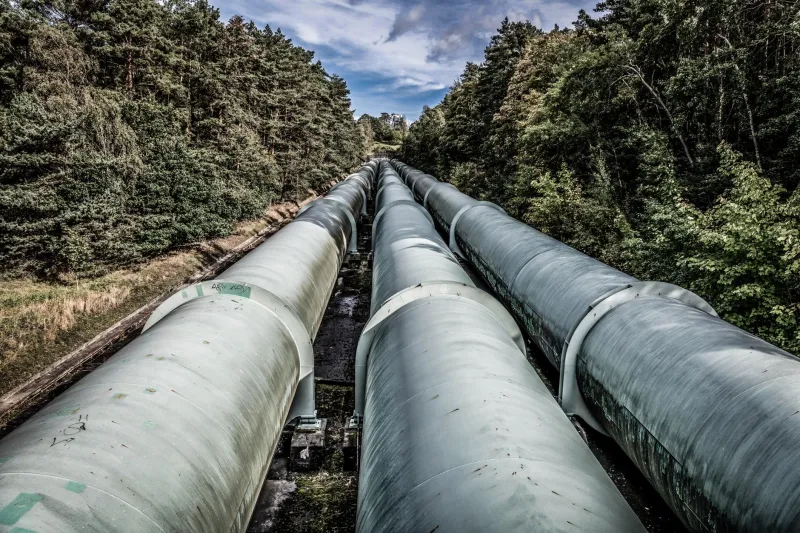
Subsea pipelines are extraordinarily difficult to defend. They traverse vast distances across international waters, pass through jurisdictions with varying levels of maritime patrol capability, and cannot be hardened against determined attack in the way that land-based infrastructure can be monitored and protected. The Baltic Sea pipelines are the most documented case, but the same logic applies to the Mediterranean subsea cables and pipelines that connect North African gas fields to European consumers, and to the interconnectors that link UK energy infrastructure to the continental grid.
What the Nord Stream precedent established — or rather, confirmed for those paying attention — is that energy infrastructure sabotage can be executed below the threshold of armed conflict, with plausible deniability maintained long enough to prevent a coordinated allied response. The cascading effects on European energy markets in the months that followed demonstrated that the economic impact of infrastructure disruption can exceed the damage achievable through direct military action.
Grid Interconnection as Attack Surface
Electrical grid interconnection across allied nations was designed to create resilience through redundancy: if one national grid experiences a generation shortfall, neighboring grids can export power to compensate. In practice, this interconnection also creates a mechanism through which a disruption in one node propagates across borders before system operators can isolate the fault.
The European grid's interconnection architecture — managed through the ENTSO-E synchronous area — is a genuine engineering achievement, but it is also a unified attack surface. Cyber intrusions targeting grid management systems, physical attacks on high-voltage transmission infrastructure, or coordinated manipulation of energy market systems could, under the right conditions, trigger cascading failures that cross national borders faster than national emergency response frameworks can coordinate.
US Cyber Command and the Cybersecurity and Infrastructure Security Agency have both documented sustained adversarial reconnaissance of American grid infrastructure. What receives less public attention is the parallel reconnaissance of allied grid systems — particularly in the Baltic states, where Russian military planners have mapped energy dependencies with a granularity that reflects years of systematic collection. The three Baltic states' connection to the Central European grid, completed in 2025, represents a genuine improvement in their energy security posture, but the transition period itself created windows of vulnerability that were almost certainly monitored.
What Strategic Planners Must Prioritize
The core analytical challenge for American security planners is resisting the temptation to assess energy infrastructure vulnerabilities on a node-by-node basis. Individual facilities can be hardened; individual pipelines can be monitored. What cannot be addressed through bilateral, facility-level security measures is the systemic interdependency that makes simultaneous multi-point pressure so attractive to adversarial planners.
Three priorities warrant immediate elevation on the strategic agenda.
First, allied nations need a shared, continuously updated model of cross-border energy interdependency that identifies the specific combination of node failures that would trigger continental-scale cascading effects. This model does not currently exist in a form that is integrated across NATO and Indo-Pacific alliance structures.
Second, the intelligence community needs to treat adversarial energy infrastructure mapping as a collection priority in its own right — not merely as a component of broader critical infrastructure reporting. Understanding what an adversary knows about allied grid vulnerabilities is as strategically significant as understanding the adversary's own order of battle.
Third, the United States needs to develop — and exercise — coordinated allied response protocols for energy infrastructure attacks that fall below the threshold of armed conflict. The Nord Stream precedent demonstrated that the absence of such protocols leaves allied governments improvising under pressure, which is precisely the condition adversarial planners are designing for.
The map of allied energy vulnerability already exists. The question is who is reading it more carefully.