Severed Connections: The Undersea Cable Network America Cannot Afford to Ignore
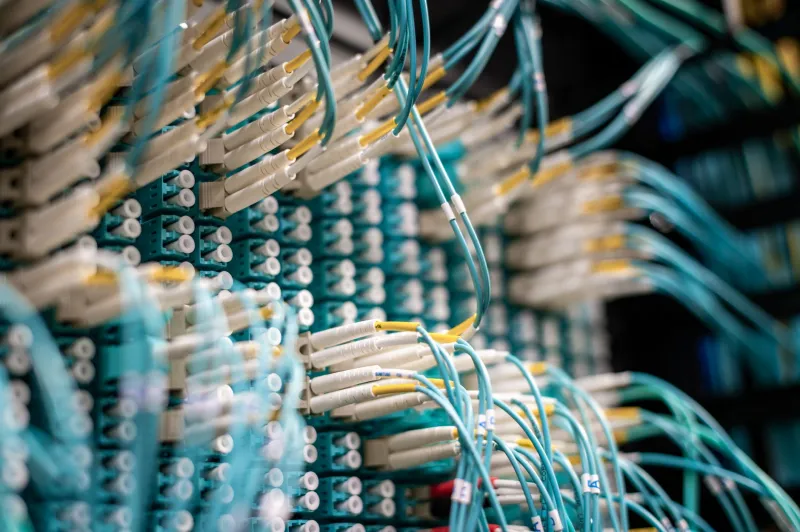
Beneath the surface of every major ocean lies an invisible architecture that sustains the modern world. Fiber optic cables, some no thicker than a garden hose, carry the overwhelming majority of international internet traffic, financial transactions, and intelligence communications that underpin American economic and national security. Yet despite their foundational importance, these cables occupy a conspicuous blind spot in mainstream threat assessments — a gap that strategic competitors appear increasingly willing to exploit.
For policy makers and security professionals mapping the full terrain of American vulnerability, the undersea cable network represents one of the most consequential and least-discussed chokepoints in the national security landscape.
The Weight of the World on the Ocean Floor
The global undersea cable system comprises more than 400 active cables spanning roughly 1.3 million kilometers. These routes are not evenly distributed. Traffic concentrates through a relatively small number of high-capacity corridors: the North Atlantic, the Pacific basin, and the narrow maritime passages connecting Europe to Asia via the Middle East. This geographic concentration creates natural chokepoints — points where disruption, whether accidental or deliberate, can cascade into systemic failure.
The United States depends on these cables for everything from routine commercial communications to the real-time coordination of financial markets. The Society for Worldwide Interbank Financial Telecommunication (SWIFT) and other critical transaction networks rely on undersea fiber as their physical backbone. Military and intelligence communications, while often routed through dedicated or encrypted channels, are not entirely insulated from the vulnerabilities of shared physical infrastructure.
What makes this dependence particularly acute is the degree to which American strategic competitors have inserted themselves into the ownership, construction, and maintenance of this infrastructure.
The China Factor: Ownership, Access, and Ambiguity
Huawei Marine Networks — now rebranded as HMN Technologies following regulatory pressure — has secured contracts to build or upgrade dozens of undersea cable systems across Asia, Africa, and the Pacific. While American officials have raised concerns about potential surveillance capabilities embedded in Chinese-built cable infrastructure, the more immediate and structural problem is subtler: the concentration of cable landing stations and network access points in jurisdictions where Chinese state influence is significant.
Cable landing stations are the terrestrial endpoints where undersea cables connect to national networks. They represent the most accessible points for interception, manipulation, or physical disruption. In several strategically sensitive regions — including portions of the Indo-Pacific and parts of sub-Saharan Africa — landing stations operated or serviced by entities with opaque ties to Beijing create what intelligence professionals describe as passive collection opportunities. Traffic does not need to be actively intercepted at the cable itself; access at a landing station, combined with sufficient technical capability, can yield equivalent intelligence value.
The United States has attempted to counter this dynamic through the Team Telecom review process, which scrutinizes foreign participation in submarine cable projects that touch American shores. Several cable systems with Chinese participation have been denied or restructured as a result. However, these measures address only cables with direct US landing rights — they do not resolve the exposure created by American data transiting foreign-controlled infrastructure en route to third countries.
Cuts, Conflicts, and the Limits of Redundancy
The vulnerability of undersea cables is not theoretical. In February 2024, cables in the Red Sea were damaged in incidents linked to Houthi activity, disrupting traffic across routes connecting Europe, Asia, and East Africa. The episode forced a rerouting of significant data volumes and provided a real-world demonstration of how regional conflict can translate into global communications disruption.
Historically, the majority of cable breaks have been attributed to fishing vessels and ship anchors — accidents rather than sabotage. However, the intelligence community has grown increasingly attentive to incidents that do not fit this pattern. NATO officials have publicly warned of suspicious vessel activity near critical cable routes in the North Atlantic and Baltic Sea, with Russian naval and research vessels repeatedly observed in proximity to high-value cable corridors.
The challenge for analysts is one of attribution and intent. Cables break with some regularity under ordinary circumstances. Distinguishing a deliberate cut from an accident — particularly when the break occurs in international waters — is technically and diplomatically complex. This ambiguity is itself a strategic asset for any adversary seeking to probe or degrade American communications infrastructure while maintaining plausible deniability.
Redundancy, often cited as the system's primary defense, offers only partial reassurance. While traffic can in principle be rerouted following a cable failure, the practical capacity constraints of alternative routes mean that significant degradation is likely in any scenario involving multiple simultaneous cuts. A coordinated attack on even three or four major cables in the same corridor could produce disruptions far beyond what current contingency planning anticipates.
Intelligence Blind Spots and the Surveillance Dimension
Beyond physical disruption, the surveillance dimension of undersea cable vulnerability deserves sharper attention. Signals intelligence collection via submarine cable interception is not a new capability — the United States has itself employed such methods, as documents disclosed over the past decade have confirmed. What has changed is the expanding number of state actors with the technical means and operational motivation to conduct similar collection.
For American intelligence agencies, the concern is not merely that adversaries can intercept US communications transiting foreign-controlled cables. It is that the resulting collection creates an asymmetric intelligence advantage — one that informs adversary decision-making on economic negotiations, military posture, and diplomatic strategy without triggering the observable signatures that traditional surveillance methods produce. This form of passive, persistent access is among the most difficult threats to detect or attribute.
The commercial satellite communications sector, frequently discussed as a potential redundancy layer for undersea cables, does not fully resolve this problem. Satellite bandwidth remains orders of magnitude below cable capacity, latency profiles differ significantly, and the satellite segment introduces its own set of interception vulnerabilities.
Mapping the Gap: What a Serious Policy Response Requires
Addressing undersea cable vulnerability requires moving the issue from the periphery of national security planning to its center. Several discrete steps would meaningfully reduce American exposure.
First, the United States should accelerate investment in cable route diversification, particularly in the Pacific, where existing routes concentrate through a small number of chokepoints. The CABLES Act and related legislative efforts have begun this work, but funding and implementation timelines remain insufficient relative to the pace of adversary activity.
Second, allied coordination on cable security needs to move beyond information sharing toward joint physical protection protocols. NATO's undersea infrastructure protection framework is a constructive starting point, but it requires broader participation and clearer operational mandates.
Third, the intelligence community's threat assessment architecture should formally incorporate undersea cable vulnerability as a standing analytical priority rather than a niche technical concern. The absence of this infrastructure from mainstream threat mapping is not a reflection of its actual risk profile — it is a product of institutional blind spots that adversaries are well positioned to exploit.
The ocean floor is not a neutral space. It is contested terrain, and the cables running across it are strategic assets whose protection demands the same analytical rigor applied to any other dimension of America's critical infrastructure. Failing to map this threat does not make it disappear — it simply ensures that the next disruption arrives without warning.